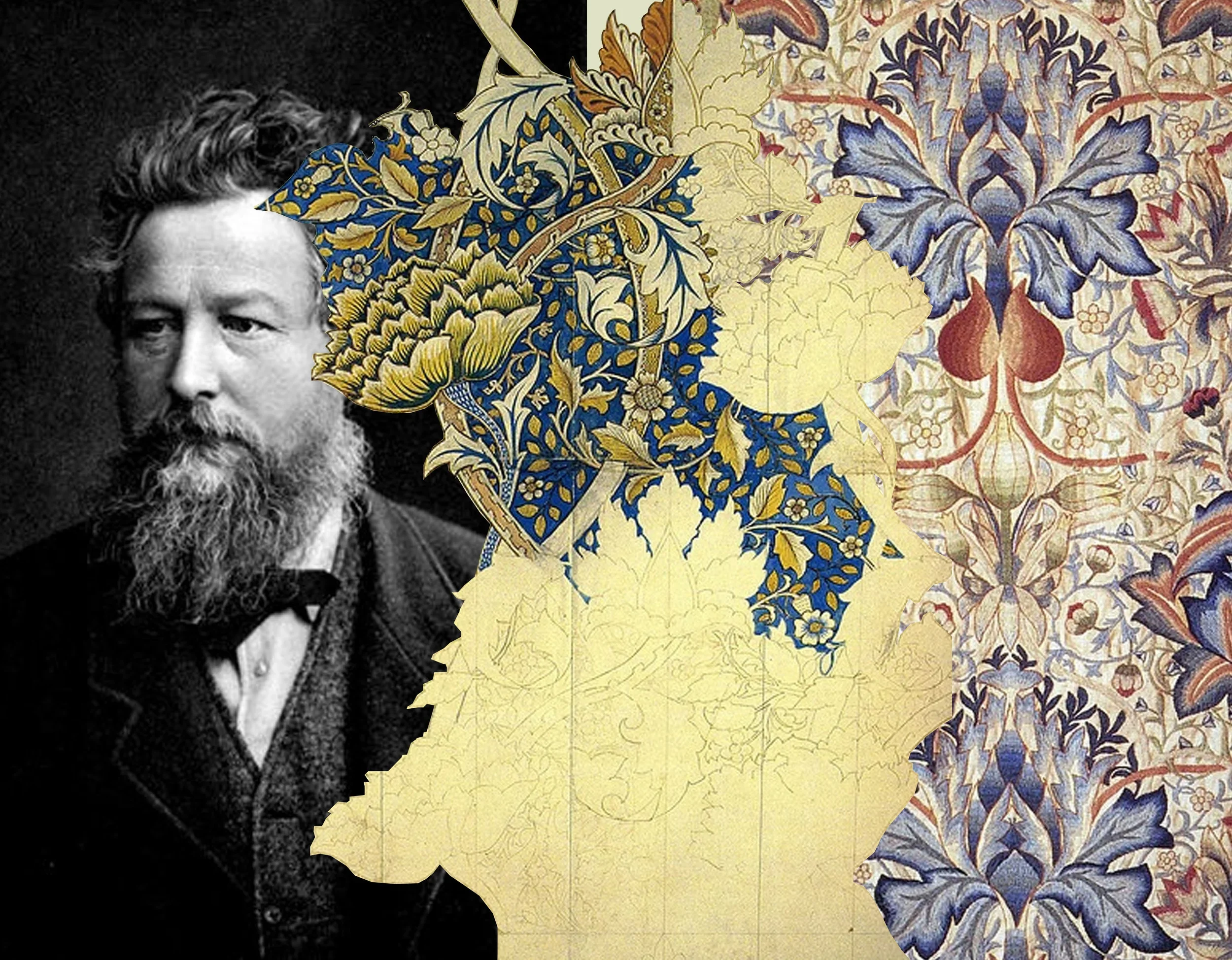
The William Morris Society’s Symposium on Architecture will take place during ‘Morris Month’ in 2027. It will take as its starting point Morris’s views on ‘The Prospects of Architecture in Civilisation.’ Architects, scholars, planners, conservators and anyone interested in this field are invited to submit a presentation proposal. Afternoon presentations will last around 25 minutes, followed by discussion. There will be a single presentation in the evening lasting 50 minutes, followed by discussion. Digitickets for attendance will be available on the WMS website from December 2026.
Call for Papers
If you are interested in presenting a paper at the symposium, please send a proposal of no more than 250 words to John Blewitt, editor of the Journal of William Morris Studies, at: journal@williammorrissociety.org by 14 November, 2026.
Presenters will be invited to submit their presentations as written contributions for publication in a Special Issue of the Journal of William Morris Studies. The deadline for journal submission is 21 May 2027.
Symposium Briefing
In his 1881 lecture ‘The Prospects of Architecture in Civilisation,’ William Morris stated that architecture was worth the attention of all serious people throughout their lives, even if they had nothing to do with it professionally. This noble art of civilisation, he continued, must be cherished, and be cherished by all the crafts whereby human beings make things. For Morris, architecture is the union of all the arts. It embraces consideration of all the external surroundings of people’s lives and all building types - ecclesiastical, public, commercial, etc. Both art and architecture require us to respect and live in harmonious relation with the beauty and fairness of the earth and not to create squalor, ugliness, ignorance, or the make-shift. If we are careless, a ‘blind brutality’ will destroy art and life. Thus, to fashion an architecture worthy of civilisation, it will be necessary to throw off the chains of dead and powerless tradition and to arrest the progressive degradation of meaningful and creative work caused by the application of machinery. Too often, the natural world is turned into ‘ready money’ through wanton destruction. Consequently, architecture, including ‘the planning of houses,’ is little more than an expression of competitive commerce which produces hovels and misery for the poor and development opportunities, profit, and wealth for the rich.
According to Morris, creating a truly noble art of architecture will require us to swim across ‘a river of fire.’ All that enslaves the mind, body, and soul will need to be overcome. This would involve creating decent housing for the poor with space, light, pure air, and privacy; common laundries, kitchens, and gardens; with everything ‘healthful, pleasant, and beautiful.’ Whether constructed as ‘vertical streets’ in existing urban areas or as individual units located in the countryside, these dwellings should be well-built, beautiful, and comfortable. Architecture must be the product of intelligent and cooperative work, using suitable materials to construct suitable buildings, and in sympathetic connection with nature. Building materials are the very foundation of architecture, and Morris had distinct ideas about what ought to be used, what was beautiful and what was regionally distinctive. Neither must we forget History for ‘the untouched surface of ancient architecture bears witness to the development of man's ideas, to the continuity of history, and, so doing, affords never-ceasing instruction, nay education, to the passing generations, not only telling us what were the aspirations of men passed away, but also what we may hope for in the time to come.’
This symposium will aim to explore how Morris’s ideas continue to resonate with people around the world. Papers are welcome that explore historical or contemporary themes, issues, and figures, or, as Morris did, which speculate on future needs, hopes, and possibilities.
Conference Details
Morris Month, 2027.
Date: 10 & 11 March, 2027.
Time: 14.00 to 17.15 & 18.15 to 19.45 GMT (both days).
Venue: Online.
Cost: Free